Ota Karst Canyon
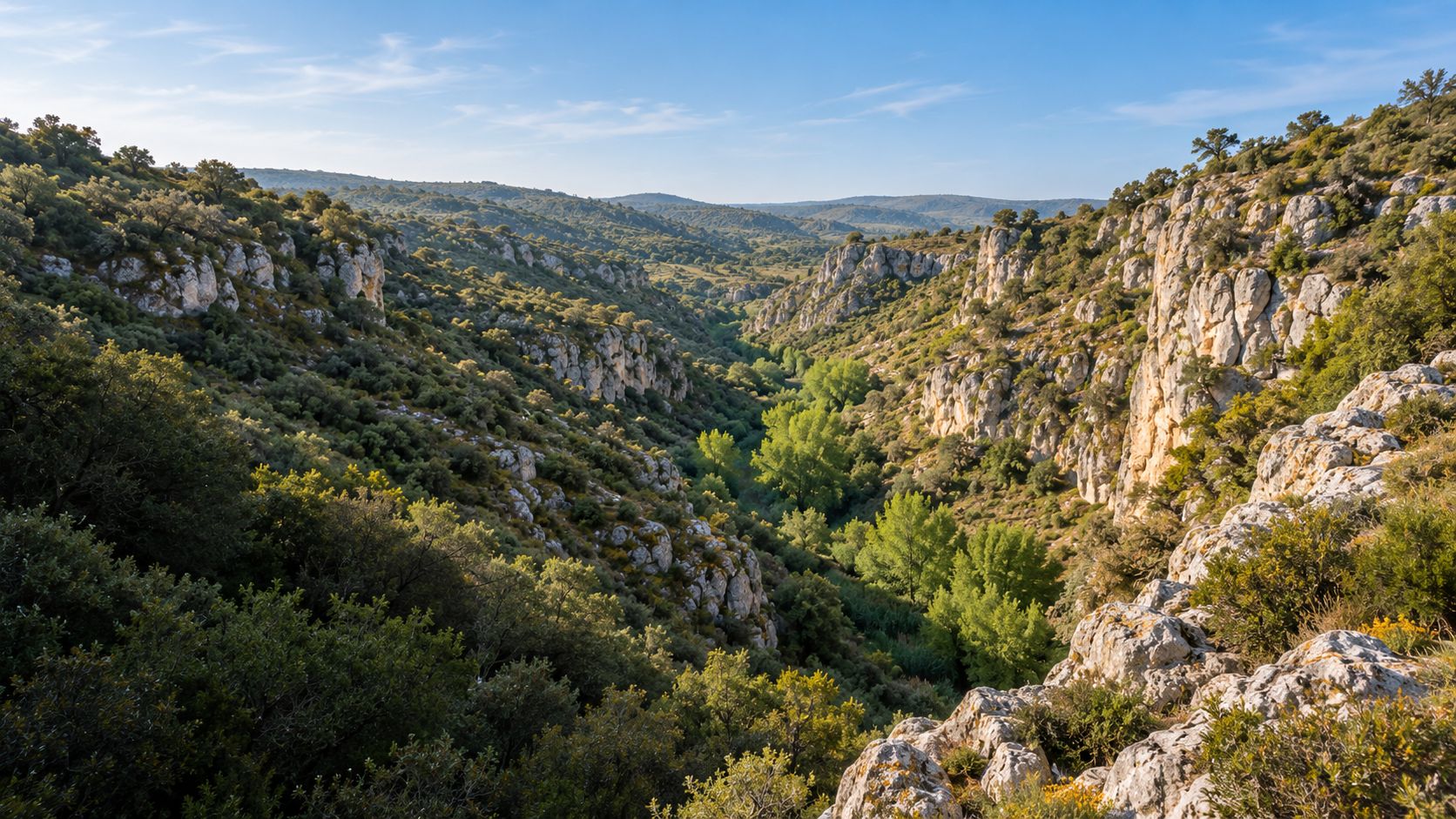
A narrow and deep valley, with vertical walls, carved by water in a limestone massif.
What is a karst canyon?
It is an enclosed valley, with steep slopes, carved into limestone rocks by the combined action of erosion and the dissolution of rock by water.
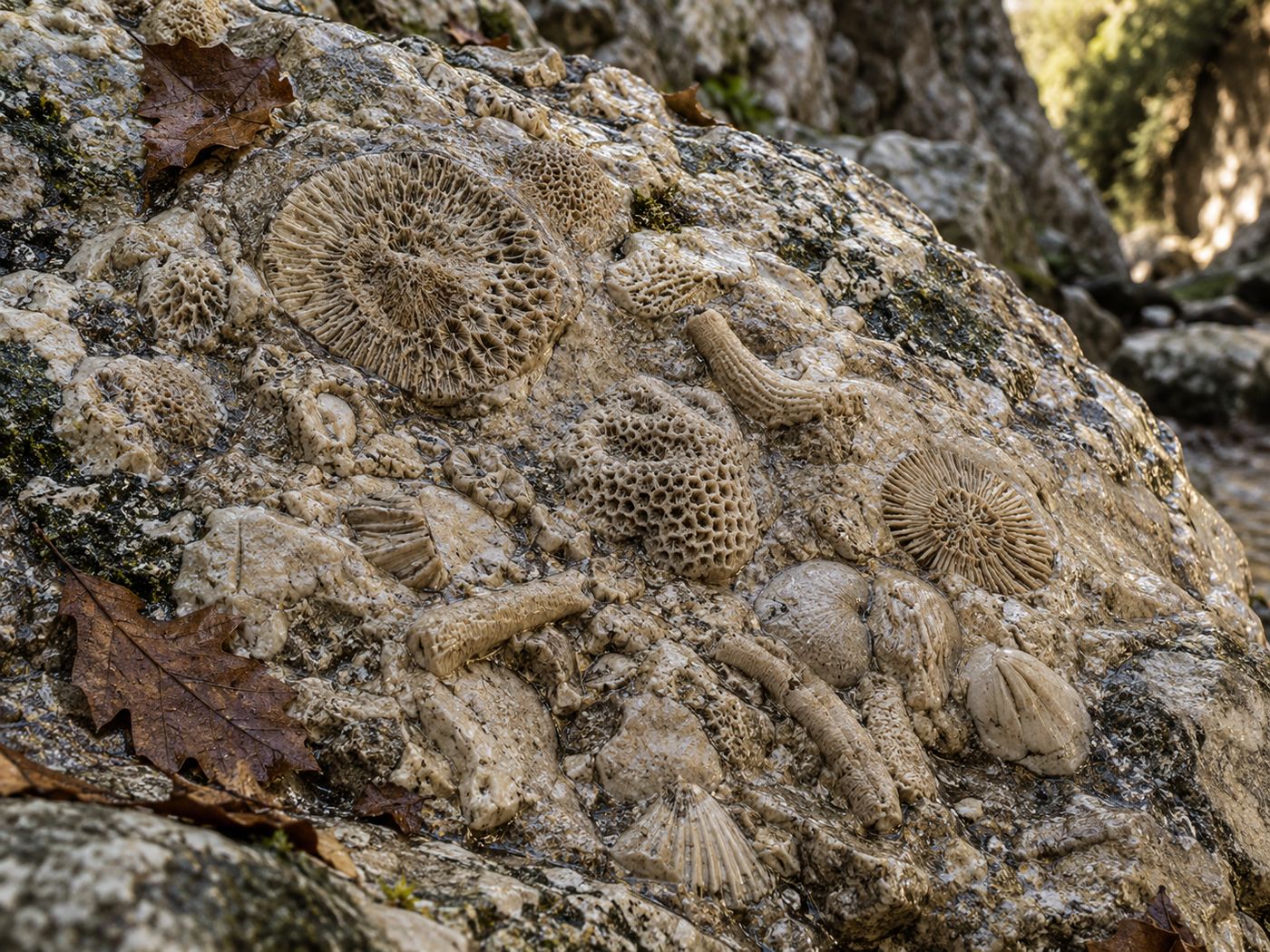
In Ota, the stream has deepened its bed as the land has risen, cutting through layers of limestone formed in the Late Jurassic, when this region was covered by a warm and shallow sea, with coral reefs.
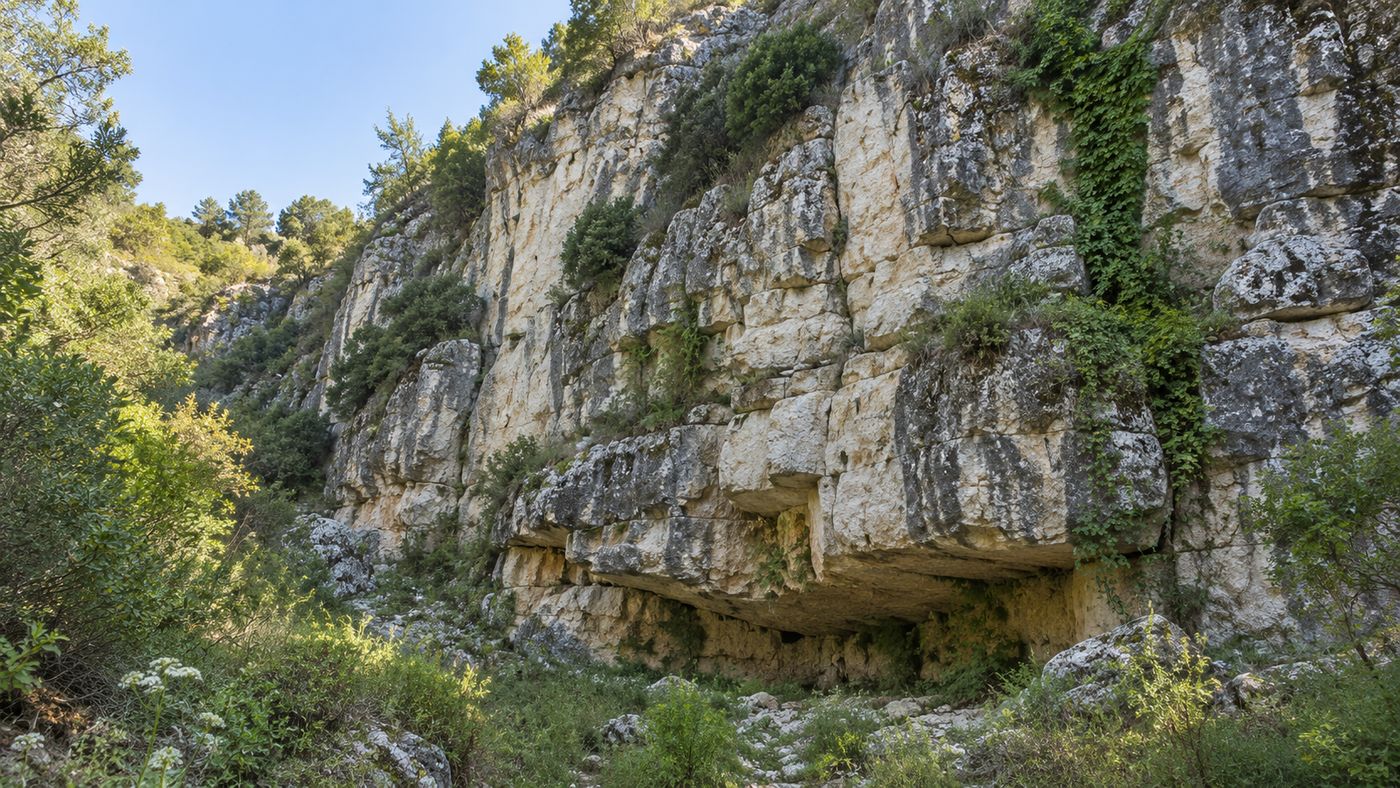
The result is a rare landscape in the Lisbon region: rocky cliffs, rock shelters, dissolution features, and a green corridor along the waterline.
How it was formed
- About 150 million years agoCoral reefs grow in a shallow tropical sea and accumulate as limestone.
- Millions of years laterMovements of the crust raise the rock layers above sea level.
- Over thousands of yearsThe Ota stream carves the valley; rainwater dissolves the limestone and opens rock shelters and karren.
- TodayThe canyon is protected as a Local Natural Monument.
Indicative dates — validate with the technical team.
Three values, one place
Geology
Reef limestones with fossils, cliffs, rock shelters, and surface karst features.
Nature
Flora of rock crevices, riverside vegetation, and birds nesting in the cliffs.
Heritage
Quarries, paths, and memories of the Ota community linked to stone and the stream.